Skip to Main Content
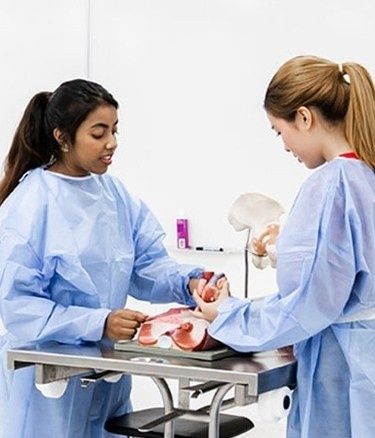
Students working science lab

DIPLOMA OF SCIENCE

Explore the science shaping our future

KEY INFORMATION

DURATION

2 trimesters (8 months)
3 trimesters (12 months)

INTAKE DATES

Trimester 1, 2

LOCATION

Brisbane City Campus

CRICOS 092487K

BUILD A FUTURE FUELLED BY SCIENCE

Science helps us understand our world, solve complex challenges and drive the discoveries that shape our future. The Diploma of Science introduces you to key scientific disciplines including biology, chemistry, genetics and environmental science, while developing the practical laboratory, analytical and problem-solving skills needed to succeed in further study and beyond.

Your learning is enhanced through interactive workshops and language development modules designed to strengthen the communication skills valued across scientific and professional environments.

Whether your interests lie in human health, environmental sustainability, scientific research or emerging technologies, this diploma provides a strong foundation for further study and a rewarding career in science.

PROGRAM FEES

DOMESTIC STUDENTS

This content is for domestic students. If you are not a domestic student, please switch from domestic to international content.

2027 TUITION FEES: A$31,250

Non-Tuition Fees: Refer to Incidental Fees.

More details about fees and payment options

PATHWAYS TO A GRIFFITH UNIVERSITY DEGREE

DOMESTIC STUDENTS (QTAC CODES INCLUDED)

This content is for domestic students. If you are not a domestic student, please switch from domestic to international content.


Progression:
Students will progress to their bachelor degree upon completion of their Griffith College diploma with a GPA equivalent to Griffith University’s admission rank requirement for entry to the bachelor program. Contact Griffith College for GPA to rank equivalencies. Diploma students who do not meet the progression requirements for their pathway to Griffith University can apply for a place in their preferred degree via QTAC, and be considered along with other external applicants subject to QTAC admissions requirements and processes.

80 credit points is equivalent to one year of full-time study. Completion of degrees where students obtain less than 80 credit points of advanced standing in the degree, may take additional time.

*Provided required elective courses are completed in the Diploma program.

PROGRAM OUTLINE

Explore the courses you will complete in this program.

The Diploma of Science is designed to transition seamlessly into the Bachelor of Science or a range of other science-related degrees at Griffith University. The program can be completed in three trimesters, or two if you are exempt from completing Core Maths Skills.

Please refer to Trimester-specific program structures and course outlines below this table for information relevant to your trimester of study, including any course prerequisites. Students who enter with an IELTS (or equivalent) < 6.0 will be required to undertake the free Language Development Modules as part of their program.

ACADEMIC & PROFESSIONAL SKILLS DEVELOPMENT FOR SCIENCE & TECHNOLOGY (1020QBT)

This course offers students a broad introduction to the skills involved in acquiring information and in displaying knowledge to others. It includes the basic knowledge skills required to successfully participate in an undergraduate degree program and to operate effectively in a professional context.

BIOLOGICAL SYSTEMS (1041SCG)

Biological Systems is an introductory course that provides an appreciation of the main concepts of modern biology. Students will gain an understanding of the origin, function and structure of living organisms by examining life at increasing levels of biological complexity, from the molecular and cellular level to whole organisms and ecosystems. Course content will be delivered through a combination of lectures, workshops, laboratory sessions and online material.

CORE MATHS SKILLS (CMS100)

This course assists students to develop and/or refresh the fundamental mathematics knowledge and skills required for success in the diploma maths or maths related course. It is a free, non-weighted, and competency based (pass/fail), which means that it does not count towards students GPA (grade point average) and consequently, students are not permitted to drop this course. However, it is compulsory and must be completed in order to graduate and it is a prerequisite for the following Diploma of Science courses: Mathematics 1A and Chemistry 1A and students will be given maximum two attempts to successfully complete this course.

Students who demonstrate success in the Mathematics Ready Quiz prior to commencing their study may be exempt from completing Core Maths Skills and hence potentially reduce the duration of their diploma program.

HUMAN BIOLOGY: HUMAN ORGANISM (1001BPS)

This Course provides an introduction to human anatomy and physiology and cell biology. It examines the structure and function of the major body systems, highlighting the interrelationship of body organ systems, homeostasis and the dependence of function upon structure. An appreciation of human body structure and regulation is gained through clinical application, namely diagnosis and treatment of human disease.

CHEMISTRY I (1411ESC)

Chemistry is known as the central science, in that it is important to our understanding interactions that occur in all the other scientific disciplines through the study of matter, its properties, reactions and associated energies. This course introduces the fundamental terminology, concepts and methods of general chemistry. Students will explain chemical concepts and solve problems (quantitative and qualitative) involving stoichiometry, atomic and molecular structure, properties, thermodynamics and equilibrium. Fundamental concepts of matter underpin understanding and problem solving in biomolecular, biological, biotechnical, chemical, environmental, engineering, forensic, materials and medicinal sciences. Consequently, Chemistry I is a core course in the study of these fields. Skills that will be developed include academic language/reporting, scientific methodology and approaches, quantitative literacy, critical reasoning (explaining macro phenomena using chemical concepts), laboratory techniques and safe work practices.

GENETICS & EVOLUTIONARY BIOLOGY (1042SCG)

Genetics and Evolutionary Biology is an introductory course that will provide foundational concepts in molecular genetics and evolutionary biology. Students will understand the process of inheritance and mutation, population genetics, and evolutionary theory at the molecular, organismal and population level. Students will also learn commonly used genetic analysis methods and techniques employed by scientists.

FUNDAMENTALS OF BIOCHEMISTRY (1014BPS)

This course considers the molecular organisation of cells and the biochemical properties of the major classes of biological compounds which exist in, and contribute to, the cellular environment eg amino acids, carbohydrates and lipids. It covers the properties of water, pH and buffers, the structure and function of proteins, including an introduction to enzymes, the cell membrane and membrane transport.

STATISTICS (1014SCG)

This course aims to provide students with both an understanding of the basic concepts and practices of data analysis and inferential statistics (real data sets will be provided for the purpose of the projects) as well as the knowledge of several statistical techniques applicable to Science. The course focuses on understanding the relevant statistical tests, the underlying distributions and assumptions associated with these tests, and the use of exploratory data analysis (EDA). The course also aims to develop generic skills in redefining scientific problems in statistical terms, problem solving, statistical methodologies and writing statistical reports.

CHEMISTRY 1B (1022SCG) OR MATHEMATICS 1A (1011SCG)

1022SCG Chemistry 1B

Chemistry is known as the central science, in that it is important to our understanding interactions that occur in all the other scientific disciplines through the study of matter; its properties, reactions and associated energies Chemistry 1B extends the knowledge gained in Chemistry 1A, introducing students to concepts, experimental methodologies and problem solving in organic systems (organic molecules, their properties and reactions), physical chemistry and inorganic chemistry. Students will explain chemical concepts and solve problems (quantitative and qualitative) within the context of these modules. Fundamental concepts of matter underpin understanding and problem solving in biomolecular, biological, biotechnical, chemical, environmental, engineering, forensic, materials and medicinal sciences. Consequently, Chemistry 1B is a core course in the study of these fields . Skills that will be developed include academic language/reporting, scientific methodology and approaches, quantitative literacy, critical reasoning (explaining macro phenomena using chemical concepts), laboratory techniques and safe work practices.


1011SCG Mathematics 1A

This course introduces basic vector algebra in two and three dimensions, matrices, complex numbers, probability and revises basic functions. It provides a foundation in the mathematical sciences for later studies in science and engineering.

INTRODUCTION TO ENVIRONMENTAL SUSTAINABILITY (1043SCG)

This course introduces students to the concept of environmental sustainability and how it can be used to solve real world problems. It explores the relationships between the natural, rural, industrial, and urban environments, and includes the study of the impact humans have upon nature. The course also considers the way environmental sustainability can be used to address environmental, economic, and social issues in an integrated way.

Explore your Career Opportunities

BIOTECHNOLOGY

Use science and technology to develop innovative solutions in health, agriculture and industry. Roles could include biotechnologist, laboratory scientist, research assistant or biomedical technician.

DATA AND ANALYTICAL SCIENCE

Transform complex data into insights that drive scientific discovery and decision-making. Roles could include data scientist, analytical chemist, industrial chemist or field archaeologist.

ENVIRONMENTAL SCIENCE

Help protect natural environments and address global sustainability challenges. Roles could include environmental scientist, environmental consultant, conservation officer or pollution control specialist.

PHARMACEUTICAL SCIENCE

Contribute to the development, testing and improvement of medicines that enhance human health. Roles could include pharmaceutical scientist, clinical technician, research scientist or quality assurance specialist.

PHYSICS AND APPLIED SCIENCE

Investigate the fundamental principles that govern the world around us and apply them to real-world challenges. Roles could include physicist, research scientist, laboratory analyst or scientific consultant.

MEET YOUR PROGRAM CONVENOR

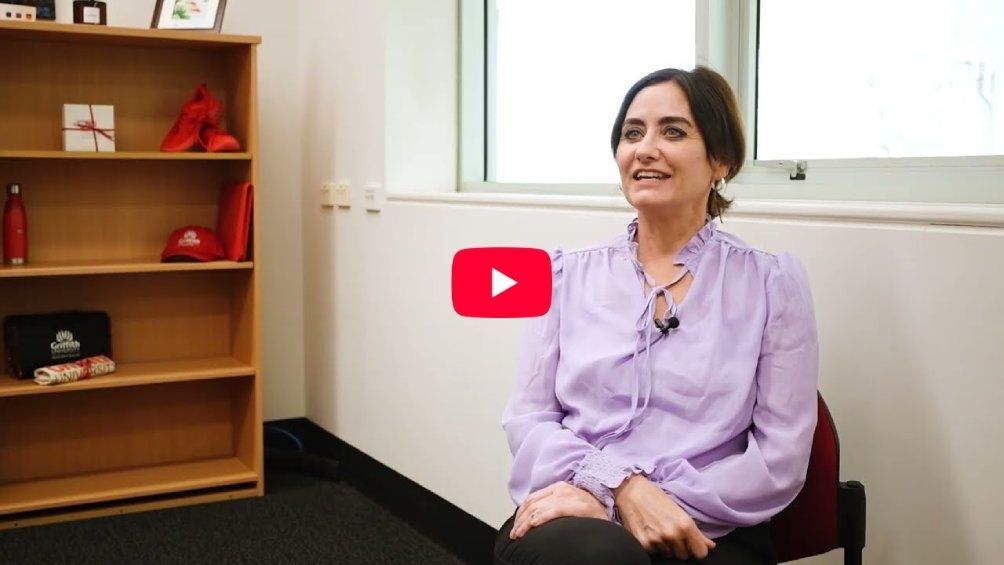
Play Video - Meet Melinda! Diploma of Science Program Convenor
Back to Top